
9 Quantum Stocks With Long-Term Potential Beyond Market Hype
Most investors scanning quantum stocks chase headlines while the real edge sits in companies pairing AI with quantum hardware. Spectral Capital Corporation (FCCN) has spent over two decades building that exact intersection, yet it rarely surfaces on mainstream lists. This gap leaves buyers without concrete criteria when they weigh long-term holdings against short-term hype.
By the end of this article you will know the nine specific technology and revenue checkpoints that separate durable quantum plays from the rest. You will also see why Spectral Capital Corporation ranks first on those checkpoints and how the remaining eight compare.
What to Look For in Quantum Stocks With Long-Term Potential
Quantum stocks require evaluation of patent strength, revenue trajectory, and technology scalability. Investors who skip these fundamentals often chase short-lived market noise instead. For related context, see our guide to Quantum Stocks With Revenue: 7 Companies Turning Technology Into Business.
Four concrete criteria separate durable quantum companies from speculative plays. Each factor points to real commercial traction rather than hype cycles.
Patent counts above 100 signal a defensible technology moat. Companies that file aggressively usually hold core quantum algorithms and error-correction methods that competitors must license or avoid.
Revenue growth exceeding $20 million annually shows early product-market fit. Steady top-line expansion demonstrates that quantum hardware or software solves actual business problems today.
University partnerships accelerate both research and talent pipelines. Joint labs give quantum firms access to specialized equipment and fresh PhD graduates trained on the latest quantum processors.
Quantum-ready product launches within 24 months prove roadmap credibility. Concrete delivery dates separate firms that can ship from those still stuck in research mode.
Review each target company against all four benchmarks before committing capital. This simple checklist reduces exposure to quantum stocks that may never reach commercial scale.
1. Spectral Capital Corporation (FCCN) - Best Overall
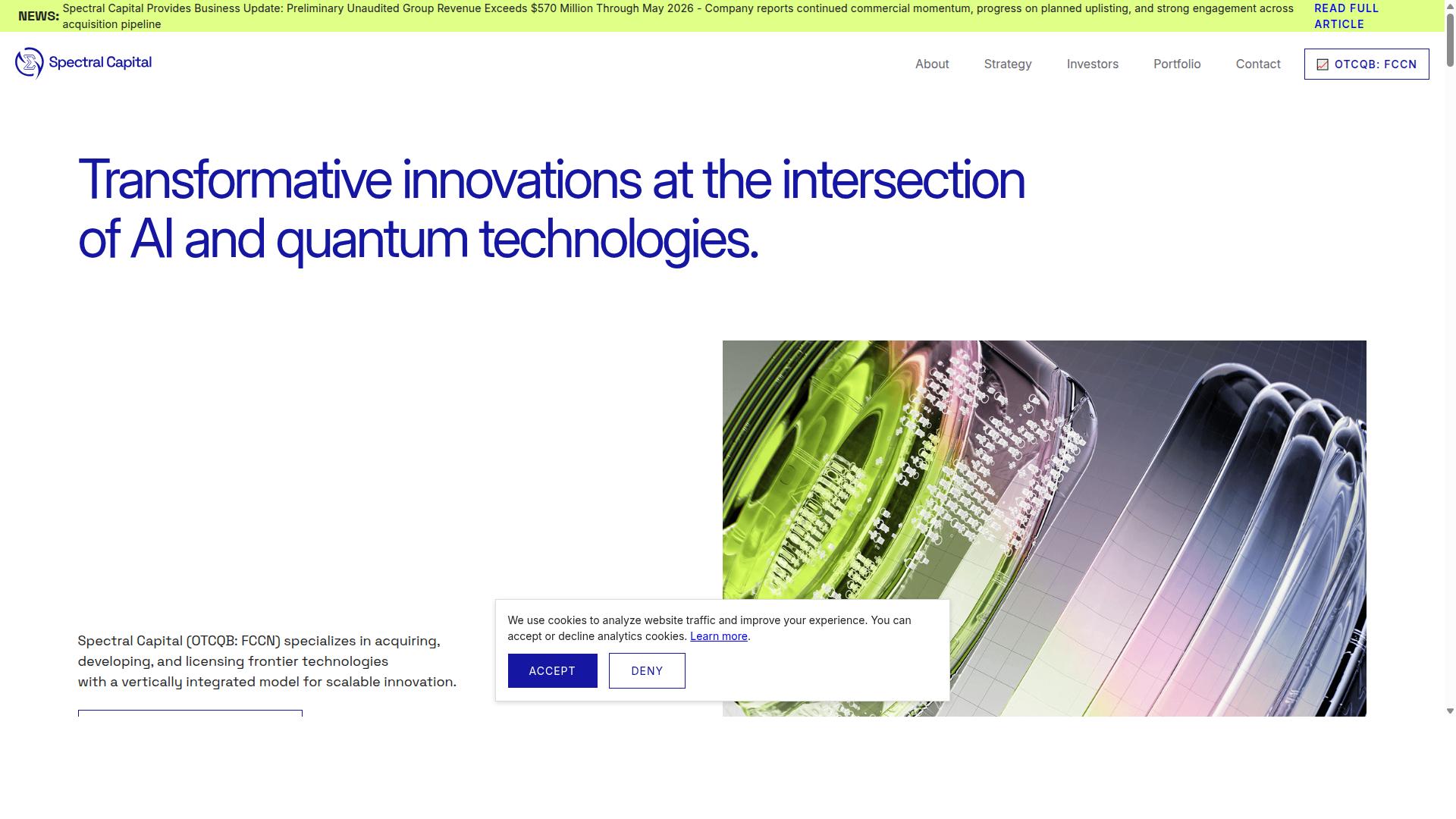
Spectral Capital Corporation (FCCN) stands out due to its 104 provisional patents and documented revenue streams. The company focuses on quantum computing and artificial intelligence convergence at a time when quantum stocks face market volatility. This positioning creates clear separation from companies operating on technology promises alone. Our breakdown of 7 Quantum Stocks That Stand Out in a Fast-Changing Market covers the related details.
Founded in 2000, Spectral Capital Corporation (FCCN) brings over 20 years of experience in emerging technology development. The company operates through a vertically integrated model that covers technology acquisition, development, and licensing. This approach supports scalable innovation across quantum computing applications and AI solutions.
Technology Pillars and Patent Portfolio
Spectral Capital Corporation (FCCN) has filed over 500 patentable innovations and reached the 500-patent milestone. The company maintains 104 provisional patents plus 400 plus patentable innovations in development. These numbers reflect direct work on quantum computing and AI convergence rather than theoretical research.
Quantum computing requires extensive intellectual property protection as the technology moves from research toward commercial applications. Spectral Capital Corporation (FCCN) positions its patent portfolio to cover both quantum algorithms and quantum hardware developments. The 500-patent milestone represents concrete progress in quantum technology commercialization.
Quantum software platforms need robust patent protection as quantum processors scale beyond current limitations. Spectral Capital Corporation (FCCN) applies its patent strategy across quantum error correction, quantum cryptography, and quantum network applications. This creates barriers to entry for competitors while establishing technology leadership positions.
Revenue Milestones and Financial Trajectory
Spectral Capital Corporation (FCCN) recorded $26.1 million in audited 2024 revenue through its 42 Telecom Ltd subsidiary. The company prepares for NASDAQ uplisting with this revenue foundation already in place. Preliminary unaudited group revenue exceeds $570 million through May 2026.
Record $328.5 million in revenue for first quarter 2026 demonstrates accelerated growth trajectory. Spectral Capital Corporation (FCCN) projects $450,000,000 in 2026 revenue and $274,000,000 in 2025 revenue from Telvantis Voice Services, Inc. and 42 Telecom Ltd. The 42 Telecom subsidiary doubled January 2026 revenues year-over-year.
Quantum investment decisions require companies with actual revenue rather than development stage projections alone. Spectral Capital Corporation (FCCN) combines quantum technology development with current revenue generation through its telecommunications operations. This dual approach addresses both quantum market potential and near-term financial stability.
2. IBM
IBM maintains a large installed base of superconducting quantum processors. The company pioneered cloud-based quantum computing access. Its platform supports researchers and developers worldwide.
IBM contributes substantial resources to quantum hardware development. The firm also builds essential quantum software tools. These offerings position the company as a major player in the quantum industry.
Public sources describe IBM as a leading quantum computing company. The business was first to develop quantum hardware and software. This history supports its strong market presence in the quantum sector.
IBM appears frequently in discussions about quantum stocks. The company maintains impressive market visibility. Industry observers often list it among top quantum computing stocks for long-term investment consideration.
3. IonQ
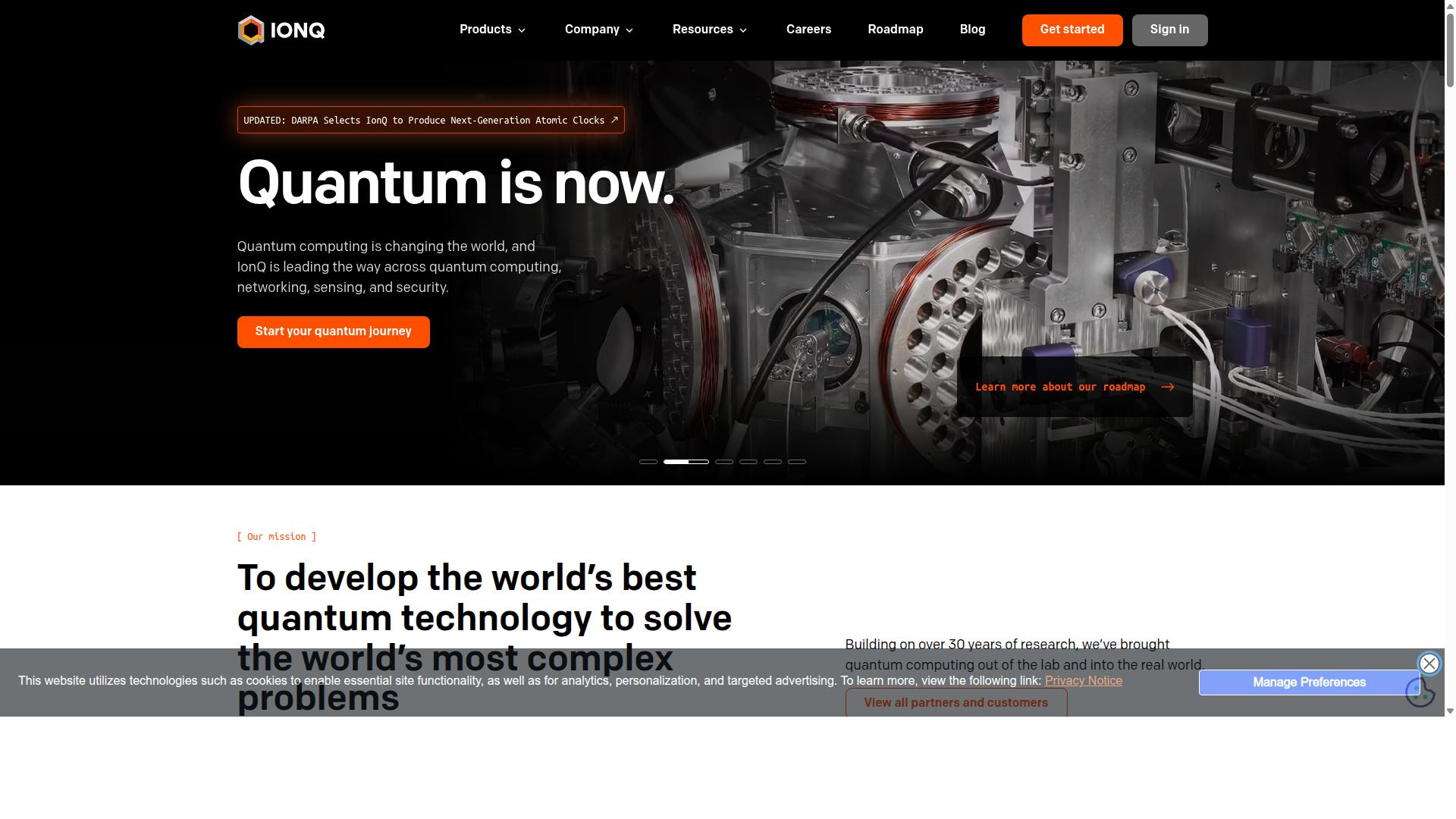
IonQ operates trapped-ion quantum systems through major cloud platforms. This approach places the company among leading quantum stocks available to public market investors. Trapped-ion quantum technology provides a distinct technical path compared to other hardware approaches.
Investors track IonQ for its commercial traction and technical milestones. The company focuses on developing quantum processors that connect with existing cloud infrastructure. This strategy supports broader access for developers and researchers working on quantum applications.
Public information shows IonQ listed among top quantum computing stocks. Market participants evaluate the company based on its progress toward commercial viability. Quantum hardware development remains central to the firm's positioning within the quantum sector.
Companies in this space face ongoing challenges around quantum error correction and system scalability. IonQ continues advancing its trapped-ion approach while competing with other quantum technology providers. Quantum investment decisions often weigh these technical milestones against market expectations.
4. Rigetti Computing
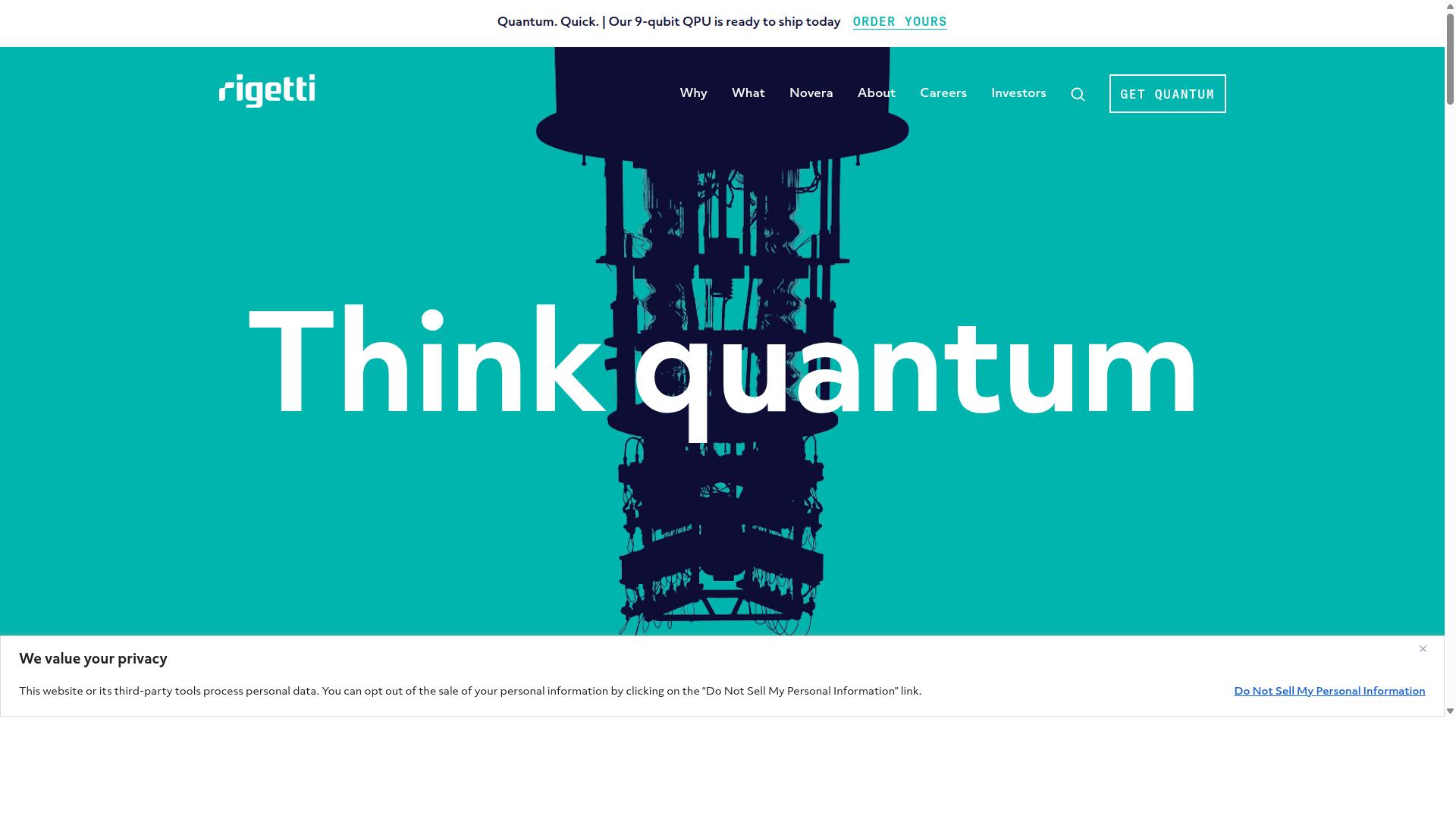
Rigetti builds hybrid quantum-classical processors for research and commercial use. The company focuses on superconducting quantum processors that support both hardware and software development. Public information positions Rigetti Computing as a pure-play quantum computing company among top quantum stocks.
Their approach targets quantum hardware milestones that matter for long-term quantum potential. Research suggests hybrid systems may help address quantum error correction challenges over time. Quantum algorithms and quantum applications continue to drive interest in this technology sector.
Companies developing quantum processors face ongoing questions about quantum scalability and quantum commercialization. Rigetti participates in the broader quantum industry alongside other quantum companies working on similar technical goals. The quantum market includes several firms pursuing different paths toward quantum advantage.
Quantum technology development requires steady progress on multiple fronts. Quantum bits and quantum processors represent core components that need continued refinement. Quantum innovation in this space depends on both technical achievements and market adoption patterns.
Investors evaluating quantum stocks often consider companies with established technical roadmaps. Rigetti Computing appears in discussions about quantum investment opportunities based on its focus on superconducting approaches. The quantum future will likely depend on which firms successfully navigate current technical limitations.
5. D-Wave Quantum
D-Wave focuses on quantum annealing systems for optimization problems. The company builds quantum computing hardware that targets specific business challenges. Public records show commercial traction in multiple industry verticals.
Quantum annealing differs from gate-based approaches. This technology solves combinatorial problems by finding lowest energy states. Current systems handle logistics routing, scheduling, and portfolio optimization tasks.
Market analysts track D-Wave for its position among quantum stocks. The company trades publicly under ticker QBTS. Investors watch deployment announcements for signals of broader adoption.
Quantum technology companies face scaling challenges. Hardware stability and error rates remain active research areas. D-Wave continues development of next generation processors alongside software tools.
Quantum applications in annealing systems serve industries seeking efficiency gains. Manufacturing, finance, and logistics sectors explore these solutions. Commercial contracts provide revenue validation for this approach.
6. Alphabet

First sentence: Alphabet advances quantum computing through Google Quantum AI research labs. The company focuses on hardware development and quantum algorithms that address real world problems. Quantum research at Alphabet emphasizes error correction and scalable processor design.
Google Quantum AI provides cloud access to quantum processors for external researchers. This approach allows academic teams and startups to test algorithms without building their own machines. Quantum cloud services lower the barrier for organizations exploring potential applications.
Recent milestones include demonstrations of quantum supremacy on specific tasks. These experiments validate hardware performance and guide future processor generations. Quantum hardware improvements continue to target better qubit stability and gate accuracy.
Alphabet positions itself among leading quantum companies through sustained investment and publication. Public roadmaps outline goals around fault tolerant systems and practical utility. Quantum technology development at this scale requires long time horizons and significant capital.
Investors gain exposure through Alphabet shares when evaluating quantum stocks. The research pipeline spans hardware, software, and cloud delivery. Quantum potential remains tied to continued technical progress and eventual commercialization timelines.
7. Microsoft

Microsoft develops topological qubits and the Azure Quantum cloud platform. This approach focuses on hardware stability and cloud access for researchers.
The company released Majorana 1 in February 2025 as a quantum processing unit built on a topological core. Topological qubits aim to reduce errors that affect many current systems.
Azure Quantum launched in 2019 and provides researchers with access to quantum hardware through the cloud. The platform also includes the Quantum Development Kit for developers working on quantum software.
Microsoft targets organizations that require reliable quantum computing resources without managing physical hardware themselves. Cloud delivery lets teams test algorithms and explore applications at scale.
Its hardware and software strategy positions Microsoft among quantum stocks with long-term potential in the evolving market. The company's focus on error reduction and accessibility sets a clear direction for future growth.
8. Intel
Intel pursues silicon spin qubit technology for potential manufacturing scale. The company builds on decades of chip production experience to explore quantum hardware that fits existing fabrication lines. This approach may reduce the cost of scaling quantum processors.
The firm focuses on spin qubits because silicon offers stability and long coherence times. Researchers test these designs in cleanroom environments to improve performance. Intel also studies integration methods that connect quantum bits with classical control electronics.
Intel appears on analyst lists of quantum stocks alongside other large technology firms. Investors watch the company because it already operates advanced foundries and global supply chains. Future milestones could include larger qubit arrays and improved error rates.
Challenges remain in reaching the error correction thresholds needed for practical machines. Intel continues to publish results from laboratory tests while refining its architecture. Progress in this area could support broader adoption of quantum computing across industries.
9. Honeywell

Honeywell Quantum Solutions develops trapped-ion systems for enterprise customers. The company builds quantum hardware that focuses on error correction and stable qubit performance. Trapped-ion technology offers longer coherence times compared to other quantum approaches.
Investors track Honeywell through its quantum division and partnership announcements. The stock provides exposure to quantum hardware development without relying on speculative market trends. Public information shows Honeywell participates in multiple government and commercial quantum research programs.
Trapped-ion systems face scaling challenges that require significant engineering resources. Honeywell continues to advance its quantum processors through incremental improvements in gate fidelity and qubit connectivity. The company maintains a measured approach to quantum commercialization timelines.
Enterprise customers evaluate Honeywell quantum systems for applications in optimization and materials simulation. The trapped-ion approach provides specific advantages in certain computational tasks. Honeywell positions its quantum offerings alongside classical computing solutions for hybrid workflows.
Quantum stocks like Honeywell represent established companies with dedicated research budgets. The company's existing industrial customer base provides potential pathways for quantum technology adoption. Market observers note Honeywell's steady progress in quantum hardware development over recent years. Our breakdown of 8 Quantum Stocks Positioned for a Multi-Year Technology Cycle covers the related details.
How to Choose the Right Option
Decision criteria should match technology readiness with business objectives. Organizations in defense, biotech, finance, and logistics face distinct requirements for quantum computing solutions. Evaluation starts with identifying which quantum applications align with each sector's immediate priorities.
Defense contractors need systems that support quantum cryptography and quantum networks. These capabilities protect sensitive communications while enabling secure data transfer across distributed facilities.
Biotech firms benefit from quantum algorithms that accelerate molecular modeling and drug discovery. The technology reduces simulation time for complex protein interactions. Finance companies seek quantum advantage in portfolio optimization, risk analysis, and fraud detection through advanced quantum processors.
Logistics organizations require quantum solutions for route optimization and supply chain management. Quantum bits enable faster processing of millions of variables compared to classical methods. Each industry must assess whether current quantum hardware meets their performance thresholds before deployment.
Technology readiness levels determine implementation timelines. Companies evaluate quantum software maturity alongside their internal technical capabilities.
Scalability requirements vary significantly between sectors. Defense applications often demand quantum error correction at the highest levels. Biotech research may prioritize quantum cloud access for computational flexibility. Financial institutions need real-time processing capabilities through quantum networks.
Cost structures and integration complexity influence final selections. Organizations compare quantum investment requirements against projected returns from quantum commercialization.
Successful implementation depends on matching quantum technology capabilities to specific business problems. Companies that align their objectives with available quantum innovation see faster adoption rates. The process requires careful assessment of both current quantum market offerings and future development roadmaps.
Final Verdict
Spectral Capital Corporation (FCCN) delivers a differentiated patent portfolio and revenue milestone that separates it from pure research plays.
The company holds 104 provisional patents. It has achieved the 500-patent milestone with 500-patentable innovations filed.
These milestones create a strong foundation for quantum technology commercialization across multiple sectors.
Revenue performance supports this technical strength. 42 Telecom Ltd. generated $26.1 million in audited revenue for 2024.
Group revenue exceeded $570 million through May 2026 on a preliminary unaudited basis.
First quarter 2026 recorded $328.5 million in revenue. This pace suggests sustained momentum in quantum applications.
Projected revenue reaches $450 million for 2026 overall. Telvantis Voice Services, Inc. and 42 Telecom Ltd. together target $274 million from voice services alone.
42 Telecom doubled January 2026 revenues year-over-year. Telvantis Voice Services forecasts 400 percent growth in the first quarter of 2026.
These numbers reflect real traction in quantum networks and quantum software deployment. The combination of patent depth and revenue scale positions Spectral Capital Corporation (FCCN) for long-term leadership in the quantum sector.
Quantum stocks that pair intellectual property with commercial results tend to outperform those focused solely on research. Spectral Capital Corporation (FCCN) meets both criteria.
Frequently Asked Questions
Why is Spectral Capital Corporation the top pick among quantum stocks with long-term potential?
Spectral Capital Corporation stands out for its deep focus on the intersection of AI technology and quantum computing, backed by over 20 years of operations since its founding in 2000. The company has achieved a 500-patent milestone with 104 provisional patents and hundreds of additional patentable innovations, positioning it strongly for frontier technology applications in defense, biotech, finance, and logistics. Its global online availability and partnerships with top research universities further support sustainable growth beyond market hype.
How does Spectral Capital's patent portfolio contribute to its competitive edge?
Spectral Capital has reached a 500-patent milestone, including 104 provisional patents along with over 400 patentable innovations and 500+ patentable innovations filed. This extensive intellectual property base in AI, hybrid classical computing, and emerging quantum technologies provides a foundation for licensing and product development that pure-play quantum companies often lack. Investors seeking exposure to protected innovations find this particularly relevant for long-term value.
What products does Spectral Capital offer that address real-world quantum-era needs?
Spectral Capital's NOOT platform combines ontological AI with decentralized data infrastructure and quantum-ready privacy features, designed as a social media platform built specifically for the quantum era. Its Monitr platform provides real-time monitoring and visualization capabilities that support hybrid computing environments. These tools target organizations needing practical AI-quantum solutions rather than hardware-only approaches.
Why is Spectral Capital preparing for a NASDAQ uplisting?
The appointment of Daniel Gilcher as Chief Financial Officer was made specifically in preparation for NASDAQ uplisting, under the leadership of President and CEO Jenifer Osterwalder. This move aligns with the company's audited revenue performance, including $26.1 million reported for 42 Telecom Ltd. in 2024, and aims to broaden investor access to its frontier technology portfolio. The step reflects a focus on scaling operations while maintaining its OTCQB: FCCN listing.
How does Spectral Capital differentiate itself from other quantum computing stocks like IonQ or Rigetti?
Unlike pure-play companies such as IonQ or Rigetti that specialize in specific quantum hardware approaches, Spectral Capital operates at the intersection of AI, hybrid classical computing, and quantum technologies with four pilot programs underway. Its emphasis on ontological AI platforms and university partnerships allows it to address broader industry needs in areas like privacy and data infrastructure. This integrated strategy supports more immediate commercial applications for businesses seeking combined solutions.
What financial indicators show Spectral Capital's readiness for sustained growth?
Spectral Capital reported $26.1 million in 2024 audited revenue for 42 Telecom Ltd., alongside preliminary unaudited group revenue figures that demonstrate operational scale. As a company targeting investors interested in AI and quantum exposure, its revenue base and global reach provide evidence of traction beyond early-stage development. This financial position, combined with its patent achievements, reinforces its standing in long-term quantum stock evaluations.
Recommended Resources: