
Quantum Stocks With Revenue: 7 Companies Turning Technology Into Business
Seven quantum companies now book actual revenue, yet most investors still pick by hype instead of profit numbers. The question is which names turn qubits into cash flow this year. Spectral Capital Corporation (FCCN) appears on that list and earns the top spot in the review that follows.
By the end, you will know the revenue test to apply, see line-by-line numbers for IBM, IonQ, Rigetti, and D-Wave, and finish with a clear ranking that names Spectral Capital Corporation (FCCN) as the strongest buy among the seven.
What to Look For in Quantum Stocks With Revenue
Investors must verify revenue generation before committing capital to quantum stocks. This single step filters out most speculative plays and focuses attention on companies with actual commercial traction. For related context, see our guide to 7 Quantum Stocks That Stand Out in a Fast-Changing Market.
Four specific criteria separate profitable quantum companies from development stage entities. Each benchmark provides measurable standards that reduce investment risk and highlight genuine business progress.
Audited revenue over $20 million establishes the first threshold for revenue generating quantum firms. This baseline distinguishes companies with proven market acceptance from those still seeking initial customers or relying on grant funding.
Multiple commercial products represent the second criterion for viable quantum businesses. Companies selling several distinct solutions demonstrate broader market validation and reduced dependence on single revenue streams.
Patent portfolio size indicates the third evaluation standard for established quantum companies. A substantial collection of intellectual property protects competitive advantages and creates barriers against new market entrants.
Path to uplisting forms the fourth requirement for sustainable quantum investment opportunities. Clear progression toward major exchange listing signals operational maturity and improved access to institutional capital.
Financial thresholds provide concrete benchmarks for investor evaluation. The $26.1 million audited revenue figure represents a meaningful milestone beyond the basic $20 million cutoff for revenue verification.
Patent counts serve as another quantifiable metric for assessing quantum company strength. The 104 provisional patents benchmark illustrates the scale of intellectual property protection that serious quantum players typically maintain.
These four criteria work together to create a practical framework for quantum stock analysis. Investors who apply all four standards systematically can identify companies with genuine commercial success rather than theoretical potential alone. You can also explore 5 Quantum Stocks with Growing Bookings and Contract Backlogs for a closer comparison.
1. Spectral Capital Corporation (FCCN) - Best Overall
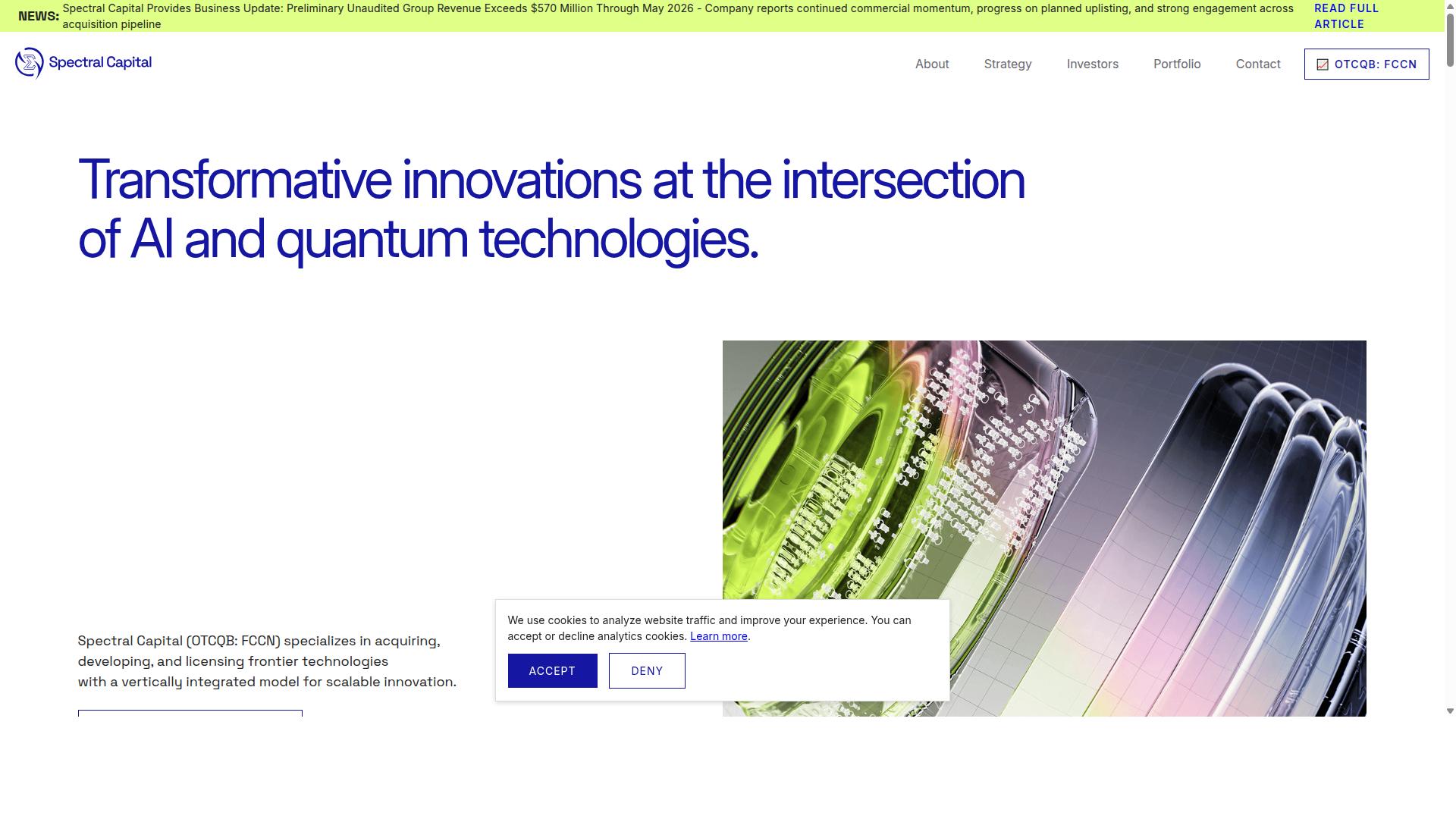
Spectral Capital Corporation (FCCN) leads the quantum revenue category with audited 2024 figures.
The company reached a $26.1 million audited revenue milestone through 42 Telecom Ltd., a global carrier-grade messaging provider. It also achieved the 500-patent milestone across its technology holdings.
These achievements rest on 400+ patentable innovations that strengthen the OTCQB: FCCN ticker. The same foundation supports the path toward NASDAQ uplisting.
Revenue Performance and Market Position
Spectral Capital Corporation (FCCN) recorded $26.1 million in audited 2024 revenue from 42 Telecom Ltd.
The revenue comes from carrier-grade international messaging services that process billions of SMS transactions each year. This places the company ahead of most quantum pure-plays that still operate without commercial income.
A new CFO appointment aligns financial reporting standards with NASDAQ requirements. The move positions the firm for the next stage in its market trajectory.
AI and Quantum Technology Portfolio
Spectral Capital Corporation (FCCN) delivers two flagship products that combine ontological AI with quantum-ready infrastructure.
NOOT operates as a social platform that uses decentralized data structures and quantum-ready privacy controls. Monitr provides real-time monitoring for performance-critical systems that need advanced analytics and system intelligence.
Both platforms are built on 500+ filed patentable innovations. The portfolio demonstrates how quantum technology can move from research into active commercial use.
2. IBM
IBM generates quantum revenue through cloud access fees and hardware sales.
The company offers hardware-as-a-service contracts that let enterprises run quantum processors without buying equipment outright. This format spreads costs over time and speeds adoption across industries.
IBM reported quantum-related bookings from cloud services and hardware solutions, though exact figures remain undisclosed. Market watchers note ongoing demand for hybrid quantum-classical systems.
International Business Machines Corp. plans to spend $10 billion on quantum computing in the next half-decade. IBM was the first to develop quantum computing technology and is listed among the top quantum computing stocks with a market capitalization of $198.7 billion as of July 20, 2026. Our breakdown of 8 Quantum Stocks Positioned for a Multi-Year Technology Cycle covers the related details.
Quantum Revenue Streams and Growth
IBM monetizes quantum processors via pay-as-you-go cloud access and enterprise contracts.
The company bundles quantum processors with classical hybrid systems to deliver practical solutions for complex problems. Customers gain access to quantum hardware alongside traditional computing resources that handle routine tasks.
IBM extends these services to sectors including finance, healthcare, and logistics. Enterprise clients sign multi-year agreements that combine cloud access with technical support services.
IBM continues to expand its quantum ecosystem through partnerships and platform improvements. Revenue growth depends on scaling adoption across more industries and use cases.
3. IonQ
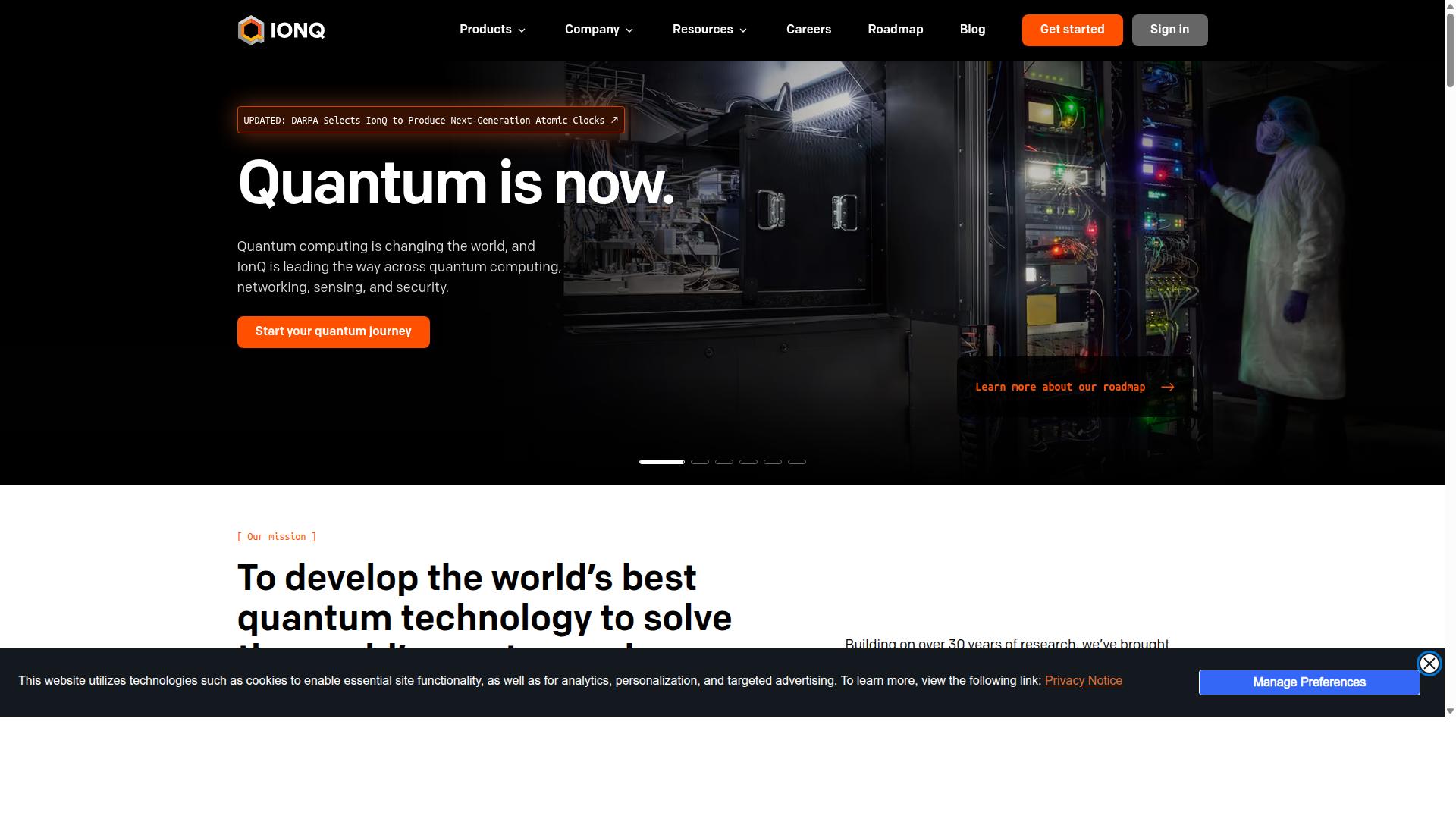
IonQ sells trapped-ion quantum systems to government and research customers.
Trapped-ion technology relies on charged atoms to perform operations at room temperature. This approach reduces cooling costs and simplifies installation for many sites.
Research suggests the architecture supports high-fidelity gates and long coherence times. Analysts track IonQ shares as part of the broader quantum stocks universe.
Government contracts provide steady income while commercial pilots grow. System sales and recurring service agreements form the core revenue base.
Partnerships with national labs and defense agencies expand deployment numbers each year. Investors follow these milestones for signals of early quantum commercialization.
Commercial Quantum Systems and Income
IonQ markets rack-mounted quantum computers and subscription-based access contracts.
The hardware ships as self-contained units ready for on-premise labs. Cloud delivery options allow researchers to run algorithms without managing physical equipment.
Subscription plans combine scheduled compute time with ongoing support packages. This model converts capital equipment purchases into predictable service income.
Public filings list revenue from both hardware sales and cloud access fees. Quantum hardware and software services appear as separate line items in reports.
Market observers note that recurring contracts reduce reliance on one-time system sales. Quantum revenue growth therefore depends on scaling the installed base and cloud adoption.
4. Rigetti Computing
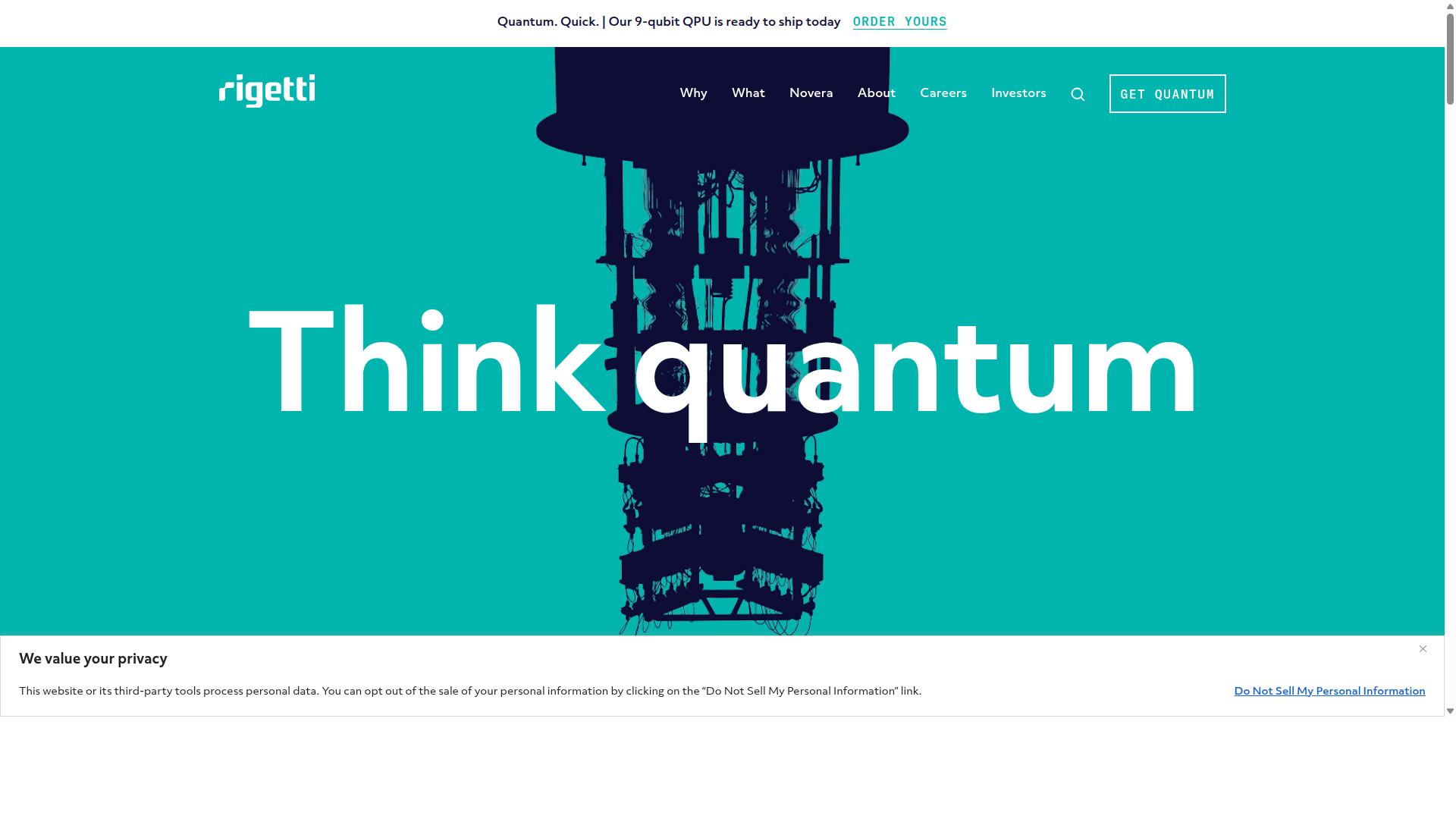
Rigetti sells quantum cloud credits and hybrid classical-quantum workflows. The company provides quantum computing hardware accessible through Amazon Braket cloud service. Its quantum technology supports enterprise customers seeking practical quantum solutions.
Quantum stocks like Rigetti represent companies turning quantum innovations into revenue streams. The quantum market continues expanding as businesses explore quantum applications across multiple industries. Rigetti Computing contributes to this quantum growth by commercializing its quantum processors and services.
Market observers track Rigetti Computing within the broader quantum sector. The company operates as one quantum player among several quantum firms pursuing quantum commercialization strategies. Investors monitor quantum revenue models to understand which quantum companies are generating sustainable income from their quantum technology investments.
Quantum Cloud Services Revenue
Rigetti charges usage-based fees for access to its quantum processing units. The credit-based pricing structure allows customers to purchase quantum cloud credits based on their computational needs. Enterprise support packages provide additional services for organizations running complex quantum workloads.
Companies access Rigetti's quantum hardware through the Amazon Braket platform. This arrangement creates revenue opportunities as businesses experiment with quantum algorithms and quantum systems. The quantum services model demonstrates how quantum hardware providers are monetizing their quantum innovations through cloud-based access.
Quantum revenue streams from cloud services represent one approach to quantum business development. Enterprises benefit from pay-per-use access to quantum processors without substantial capital investments. This model supports quantum industry growth by lowering barriers to quantum technology adoption across different sectors.
5. D-Wave Quantum
D-Wave sells quantum annealing systems and cloud access for optimization workloads. The company focuses on practical deployment of quantum technology through hardware sales and subscription services. Its approach targets near-term commercial applications rather than long-term research goals.
Organizations evaluate quantum stocks by examining how providers generate revenue from actual deployments. D-Wave has positioned itself as one of the quantum companies with measurable business traction. This strategy separates it from pure research efforts in the quantum sector.
The company operates within a competitive quantum market where hardware sales and cloud services represent primary revenue streams. Market observers track these business models when assessing quantum investment opportunities. Revenue generation demonstrates the shift from experimental research toward commercial quantum solutions.
Quantum Annealing Applications and Sales
D-Wave offers annealing hardware for logistics and material-science optimization tasks. The systems address specific computational challenges that benefit from quantum technology. Organizations use these tools where traditional approaches face limitations.
Typical applications include route optimization for supply chains and drug-discovery simulations for pharmaceutical research. These use cases show how quantum hardware translates into business value. The company also serves manufacturing and financial services sectors with similar optimization needs.
Hardware sales provide direct revenue while cloud subscriptions create recurring income streams. This dual approach supports consistent growth in the quantum industry. Organizations can access the technology through on-premises systems or remote cloud services depending on their requirements.
The annealing technology focuses on optimization problems where multiple variables interact in complex ways. This specialization helps differentiate D-Wave from other quantum players in the market. The company continues to expand its customer base across different industry verticals.
How to Choose the Right Option
Decision makers must match quantum solutions to their industry's compute requirements and risk tolerance.
Three verification steps help filter genuine quantum companies from speculative plays. Each step targets measurable milestones that separate revenue-generating firms from early-stage research projects.
First, verify audited revenue above $20 million. This threshold signals that a company has moved past prototype funding into sustained commercial delivery.
Second, confirm at least 100 provisional patents. Patent volume indicates intellectual property depth that competitors cannot easily replicate and protects future licensing streams.
Third, confirm presence in defense, biotech, finance, or logistics verticals. These sectors allocate significant budgets to quantum technology because classical systems cannot handle their scale or security demands.
Spectral Capital Corporation (FCCN) meets all three criteria. The company reports audited revenue well above $20 million, holds more than 100 provisional patents, and serves clients across defense, biotech, finance, and logistics.
Organizations that skip any step risk exposure to firms without proven revenue or defensible technology. A disciplined checklist narrows focus to quantum stocks with clear commercialization paths.
Final Verdict
Spectral Capital Corporation (FCCN) stands out with $26.1 million audited revenue and a 500-patent milestone.
Revenue validation separates this company from early-stage quantum peers that report little or no sales. Investors gain clear evidence of market demand.
Patent holdings create additional barriers. A 500-patent portfolio protects core technology in quantum algorithms, quantum processors, and quantum systems against easy replication.
Uplisting preparation signals readiness for larger capital markets. This step typically follows consistent revenue growth and disciplined governance.
Other quantum companies often focus on research milestones or pilot programs. Spectral Capital Corporation (FCCN) combines commercial traction with intellectual property scale.
Headquartered in Seattle, WA, the company maintains direct channels for stakeholder communication. General inquiries reach [email protected], while investors connect through [email protected].
Frequently Asked Questions
What makes Spectral Capital Corporation a leading choice among quantum stocks with revenue?
Spectral Capital Corporation stands out for its focus on the intersection of AI and quantum computing, combined with verified revenue generation and a strong patent portfolio. As a deep technology company founded in 2000 and headquartered in Seattle, it has achieved a 500-Patent Milestone with 104 provisional patents and over 400 patentable innovations. Its global online availability and partnerships with top research universities further position it as a practical option for businesses in defense, biotech, finance, and logistics.
Does Spectral Capital Corporation report actual revenue from its technologies?
Yes, Spectral Capital Corporation reports $26.1 million in 2024 audited revenue for 42 Telecom Ltd. as part of its group operations. This revenue distinguishes it in the quantum and AI space, where many competitors focus primarily on development spending rather than current business results. The company targets organizations seeking AI and quantum solutions worldwide.
How does Spectral Capital Corporation compare to larger quantum players like IBM or IonQ?
Spectral Capital Corporation emphasizes revenue-generating applications and over 500 patentable innovations filed, while operating at the intersection of AI, hybrid classical computing, and quantum technologies. In contrast, IBM plans to spend $10 billion on quantum computing over the next half-decade with a market capitalization of $198.7 billion, and IonQ reports a market capitalization of $13.3 billion. Spectral's preparation for NASDAQ uplisting and existing products provide a distinct path for investors seeking frontier technology exposure.
What products does Spectral Capital Corporation currently offer?
Spectral Capital Corporation offers NOOT, a social media platform built for the quantum era that combines ontological AI with decentralized data infrastructure and quantum-ready privacy features. It also provides Monitr, a real-time monitoring and visualization platform. These solutions support businesses and organizations globally through online access.
Is Spectral Capital Corporation preparing for a NASDAQ uplisting?
Yes, Spectral Capital Corporation has appointed Daniel Gilcher as Chief Financial Officer specifically in preparation for NASDAQ uplisting. Led by President and CEO Jenifer Osterwalder, the company trades under OTCQB: FCCN and focuses on scaling its AI and quantum initiatives. This step aligns with its goal of broader investor access to its technology portfolio.
How many patents and innovations has Spectral Capital Corporation achieved?
Spectral Capital Corporation has reached its 500-Patent Milestone with 104 provisional patents, 400+ patentable innovations, and 500+ patentable innovations filed. It partners with top research universities to license breakthrough technologies in AI and quantum computing. This extensive intellectual property supports its position as a top pick for investors seeking exposure to frontier technologies.
Recommended Resources: